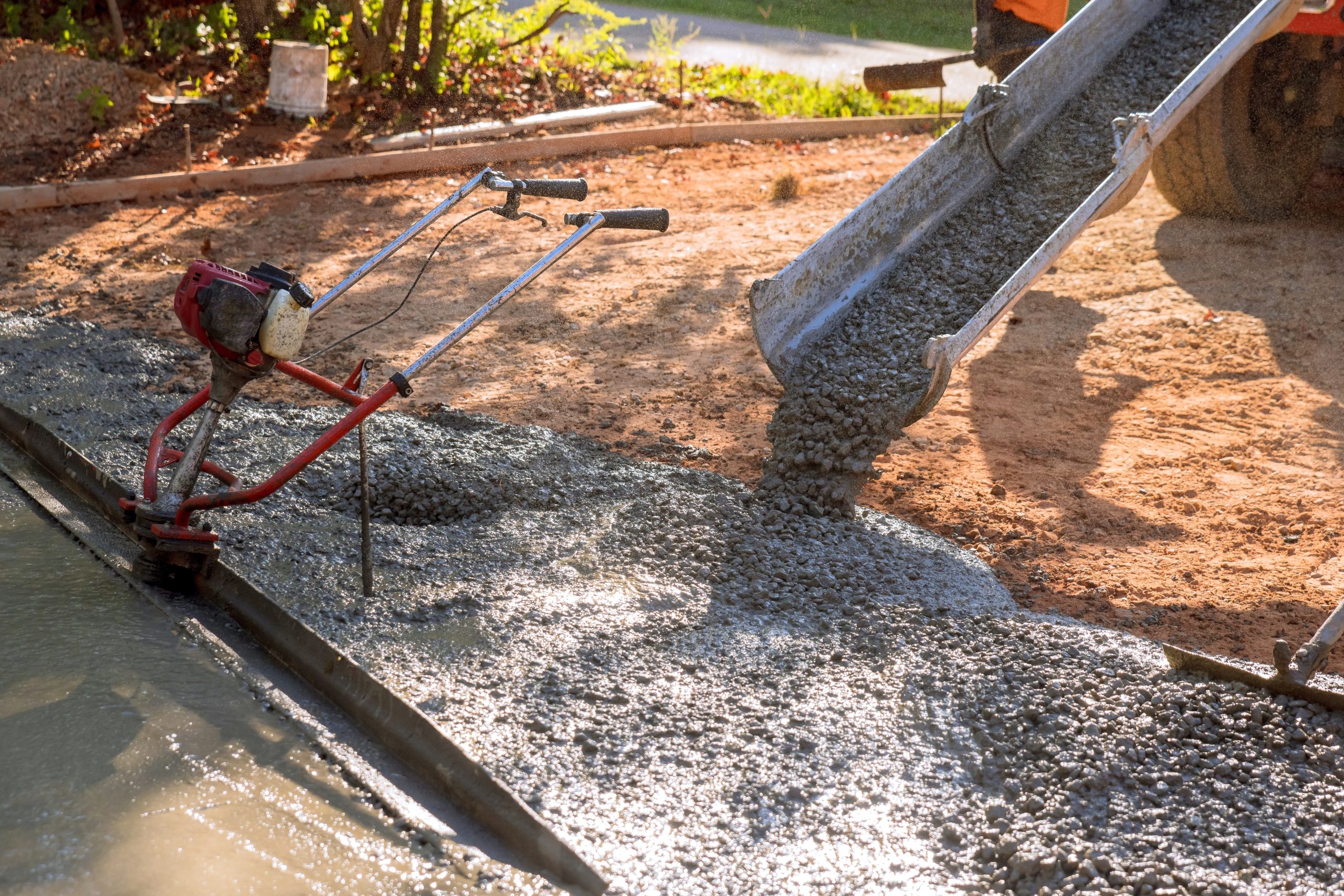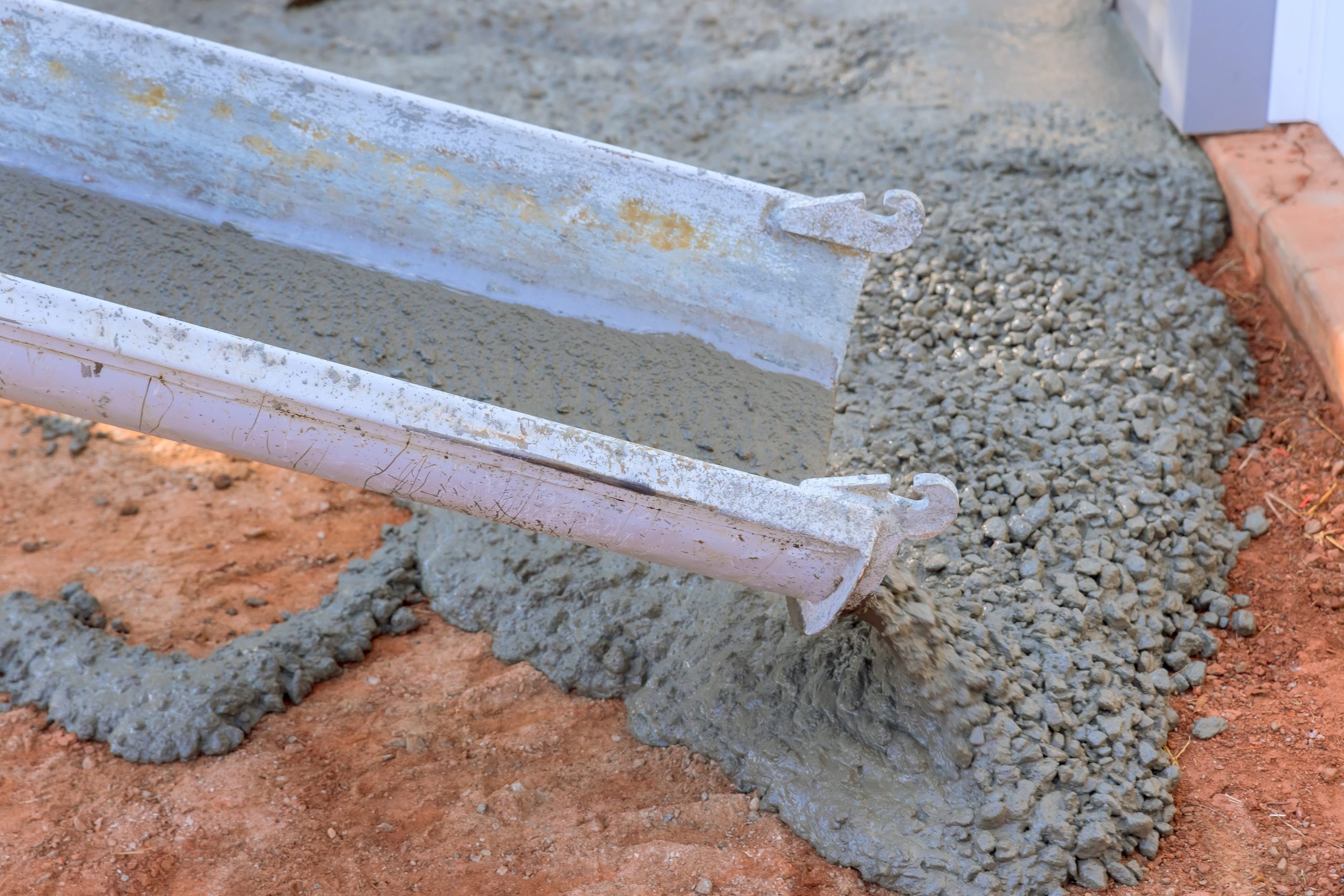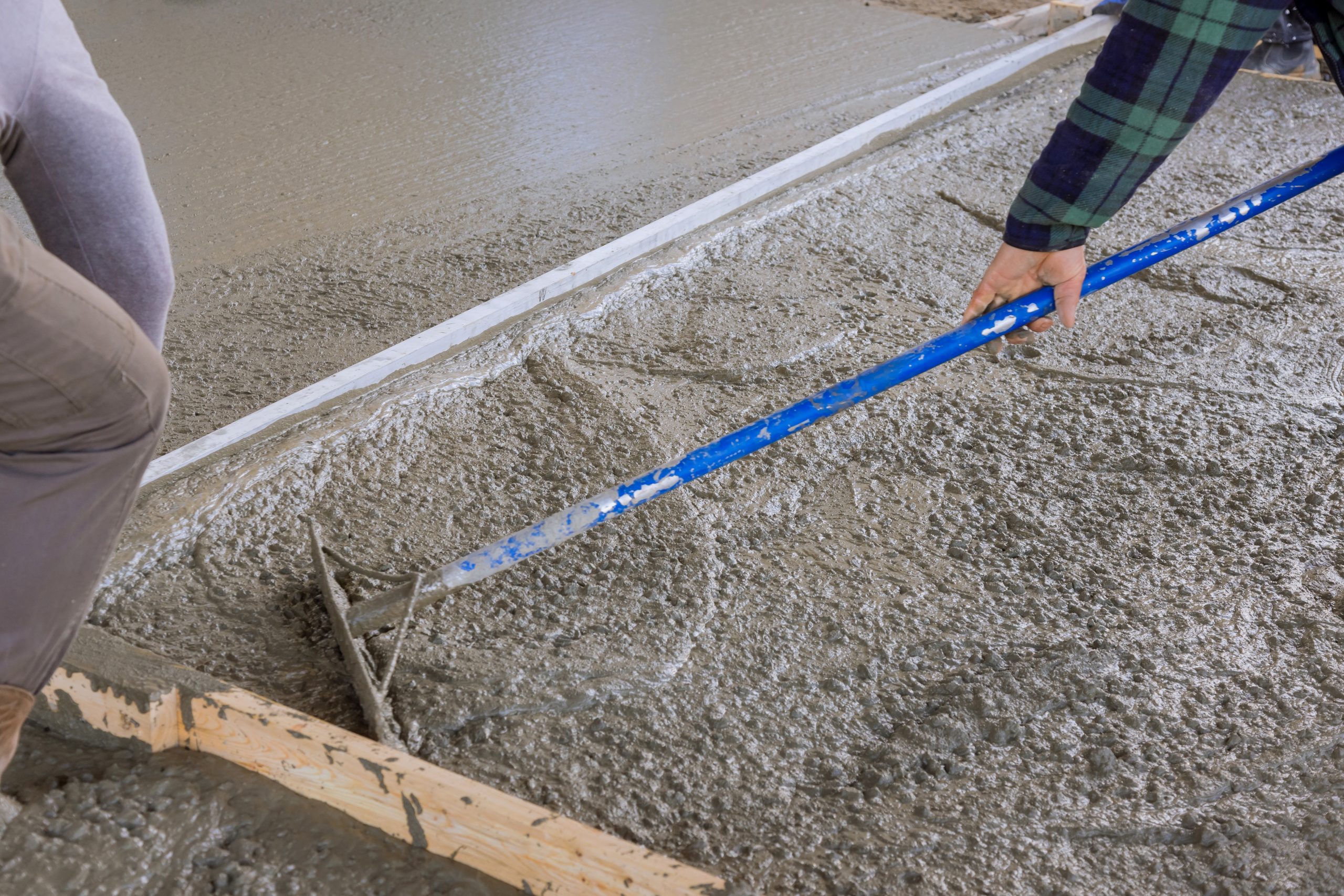
Before a single cubic metre of concrete arrives on site, you need to know exactly how much to order. Get it wrong in either direction and you have a problem: too little and you risk a cold joint mid-pour; too much and you are paying for waste. This guide walks through how to measure your patio correctly, calculate the volume, apply the right safety margin, and use the National Mini Mix concrete calculator to confirm your figure before placing an order.
Why Getting the Volume Right Matters
Ready mix concrete has a limited working life once it leaves the plant. Depending on conditions, you typically have around 90 minutes from batching to placement. If you run short mid-pour, the concrete already in place will begin to set before you can complete the slab. The result is a cold joint: a visible line of weakness where the two pours meet. Cold joints are not just cosmetic; they compromise the structural integrity of the slab and can become a point of failure over time.
Over-ordering is a smaller problem, but it still costs money. Calculating accurately, then adding a sensible buffer, is the right approach every time.
Step 1: Measure Your Patio
You need three measurements:
- Length (the longest dimension of the patio)
- Width (the shorter dimension)
- Depth (the thickness of the concrete slab)
Measure length and width at ground level with a tape measure. For depth, you need to decide this before you dig, as the excavation depth determines how much concrete you will need.
Choosing the Right Slab Depth
Slab thickness is not a one-size-fits-all figure. The right depth depends on what the patio will be used for and the condition of the ground beneath it.
| Intended Use | Recommended Slab Depth |
|---|---|
| Foot traffic and garden furniture | 100mm |
| Light vehicles (e.g. a car parked occasionally) | 125mm |
| Regular vehicular access | 150mm or more |
| Poor or soft ground conditions | Increase depth or seek advice |
For most residential patios in Sheffield, 100mm is the standard starting point. If the subbase is well-compacted and the ground is firm, this depth will handle everyday garden use comfortably. On softer ground, or if the patio adjoins a structure like a house extension, a deeper slab or additional reinforcement may be needed.
Do Not Forget the Subbase
The concrete slab sits on top of a compacted subbase, typically 100mm of MOT Type 1 hardcore. The subbase volume is separate from your concrete calculation, but you need to account for it when working out your total excavation depth. A patio with a 100mm slab and 100mm subbase requires the ground to be dug out by at least 200mm before you start.
Step 2: Work Out the Volume
The formula is:
Volume (m³) = Length (m) × Width (m) × Depth (m)
All three measurements must be in metres before you multiply. Convert millimetres to metres by dividing by 1,000 (so 100mm becomes 0.1m).
Worked Example: A 4m × 3m Patio at 100mm Depth
- Length: 4m
- Width: 3m
- Depth: 100mm = 0.1m
4 × 3 × 0.1 = 1.2 m³
This patio requires 1.2 cubic metres of concrete before any safety margin is applied.
Irregular Shapes
Most patios are rectangular, but if yours has an L-shape or a cut-out, split it into separate rectangles, calculate the volume of each section individually, and add the totals together. Never try to average an awkward shape into a single rectangle — the error will compound and you will end up with the wrong figure.
Step 3: Use the Concrete Calculator
Rather than working through the maths manually, use the National Mini Mix concrete calculator to get an accurate figure straight away. Enter your length, width, and depth, and the calculator returns your volume in cubic metres. It accepts measurements in metres, millimetres, centimetres, inches, feet, or yards, so there is no need to convert units beforehand.
For L-shaped or split patios, run the calculator separately for each section and add the results.
Quick Reference: Common Patio Volumes at 100mm Depth
| Patio Size | Depth | Calculated Volume | Volume with 10% Margin |
|---|---|---|---|
| 2m × 2m | 100mm | 0.40 m³ | 0.44 m³ |
| 3m × 3m | 100mm | 0.90 m³ | 0.99 m³ |
| 4m × 3m | 100mm | 1.20 m³ | 1.32 m³ |
| 5m × 4m | 100mm | 2.00 m³ | 2.20 m³ |
| 6m × 4m | 100mm | 2.40 m³ | 2.64 m³ |
These are base calculations for a flat rectangular slab. Add the safety margin before ordering.
Step 4: Apply a Safety Margin
Your calculated volume assumes perfectly flat ground and zero waste. In practice, neither is guaranteed.
Ground levels fluctuate slightly even on a prepared subbase. Low spots will consume more concrete than your calculation accounts for. There is also inevitable waste during placement — concrete that falls short of the forms, material left in the truck, and adjustment for any unforeseen variation in depth.
The standard approach is to add 10% to your calculated volume. For the 4m × 3m example, that means ordering 1.32 m³ rather than 1.2 m³.
On larger pours, some contractors reduce the margin to 5-7% once the subbase is well-prepared and levels are checked carefully. On smaller pours below 1 m³, it is worth rounding up more generously, as the cost difference is minimal but the risk of running short is the same.
Step 5: Choose the Right Concrete Mix
Volume tells you how much concrete to order. Mix specification tells you what type to order. For a residential patio, the two most relevant considerations are compressive strength and workability.
A C25 mix (also specified as ST3 or GEN3 under designated mix classifications) is typically appropriate for a domestic patio slab. It offers good durability for outdoor use, resistance to freeze-thaw cycles, and sufficient strength for foot traffic and garden furniture. If the patio will take occasional vehicle loading, a C30 mix may be worth discussing with the supplier.
Domestic concrete from National Mini Mix covers the full range of residential mixes. The team has been supplying Sheffield homeowners since 1985 and can confirm the right specification for your ground conditions and intended use. Do not just order by volume — make sure the mix is right too.
What Is Ready Mix Concrete and Why Use It for a Patio?
Ready mix concrete is batched at a central plant and delivered to site in the required volume, already mixed to the specified grade. According to The Concrete Centre, each batch is tailor-made to the contractor’s requirements, and the use of admixtures and supplementary cementitious materials means the mix can be optimised for strength, workability, and setting time.
For a patio project, ready mix offers clear practical advantages over site-mixed concrete:
- Consistent mix quality throughout the entire pour, with no variation between batches
- No on-site mixing equipment required, freeing up space and reducing labour
- Delivered in a single load, so the whole slab can be poured in one continuous operation — avoiding cold joints entirely
- Mix specification is controlled and documented, giving you confidence in what has been placed
Ready mix concrete from National Mini Mix is available with same-day delivery across Sheffield and South Yorkshire. Deliveries are made from the Sheffield plant, keeping transit times short and concrete workability high on arrival.